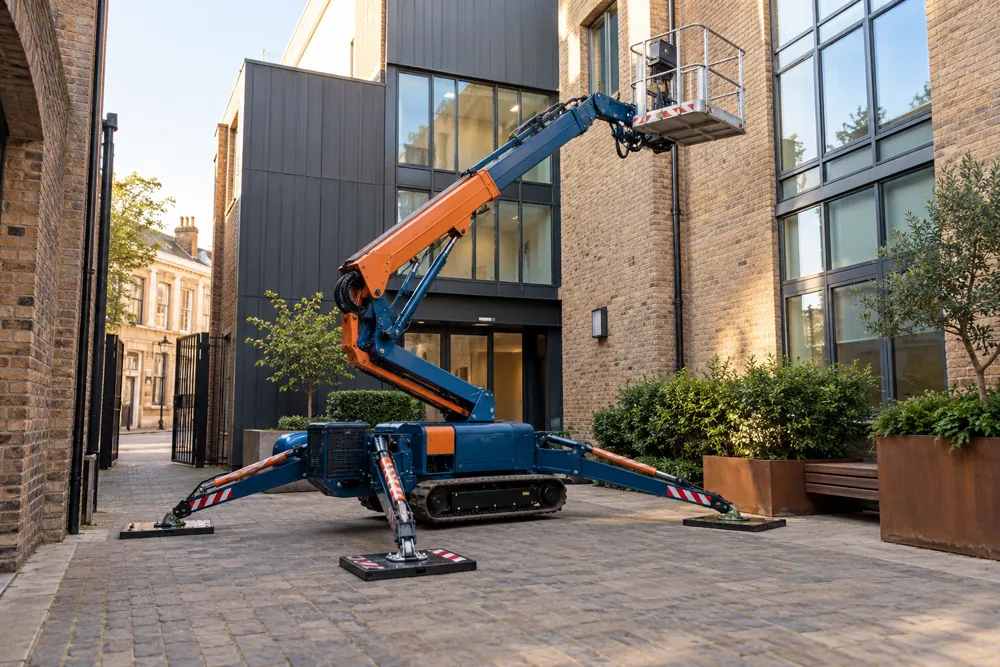
When Spider Lift Hire Makes Sense
A spider lift combines a compact tracked chassis with stabilising legs and an elevating boom. Some models can pass through restricted entrances before being set up in a larger working space. The stowed dimensions and the deployed dimensions are different, so both need to be checked.
Schools, institutional buildings and commercial courtyards can present a mix of narrow access and open working areas. A spider lift may be worth considering where a conventional self-propelled boom cannot pass through the entrance. That possibility depends on the exact model, the travel route and the surface beneath it.
Tracks do not remove the need for a ground assessment. Finished paving, cellar roofs and service covers may need particular attention at the setup location. Ask for machine weight and support loading information so the responsible person can assess the proposed route and bearing areas.
Plan The Route And The Working Position
Provide the narrowest clear opening and the lowest overhead obstruction along the route. Include door furniture, steps, turns and any changes in gradient rather than measuring only the main entrance. Photographs from both directions help reveal pinch points that a simple plan can miss.
Outriggers need enough clear space to reach the approved setup position. A compact transport width does not mean the machine can work in an equally narrow corridor. Check for planted beds, service ducts, basement areas and other features beneath each proposed support position.
For indoor use, discuss power options and the ventilation requirements of the proposed machine. Sensitive floors may also need a protection method agreed with the building manager. Ask how the equipment will be moved from the unloading point without damaging doors, thresholds or the finished surface.
Safety And Your Responsibilities
LOLER 1998 and the Provision and Use of Work Equipment Regulations 1998 are relevant to equipment selection, safe use and examination. Confirm the applicable records and responsibilities before accepting the equipment. A hire contract does not remove the duties of the business controlling its use. The Work at Height Regulations 2005 also apply to planning the access task. Ask who is responsible for the risk assessment and supervision.
How To Plan Your Hire
Define The Task
Describe the work, the location and the intended programme. Include stowed dimensions, turning route, outrigger spread and support loads. If a measurement is an estimate, say so clearly rather than presenting it as a confirmed site dimension.
Check The Proposal
Review the suggested machine and its supporting specification with the person planning the work. Ask about anything the quote assumes, including access hours, unloading space and which party will provide the operator.
Prepare For Delivery
Nominate a site contact who knows the delivery route and can receive the equipment. Arrange the agreed working area and brief other trades about the planned activity. Tell the supplier about changes before dispatch.
Agree The End Of Hire
Keep the equipment available for the agreed collection and follow the supplier’s off-hire process. Record any changes to the programme promptly. Clarify whether a collection request ends the hire charge or whether another contractual condition applies.
What Affects The Hire Cost
The cost is shaped by equipment specification, the duration and transport arrangements. An operator, specialist attachment or restricted delivery window may change the scope. We do not publish a starting price that assumes every London site has the same access and working conditions.
Ask for the proposal in writing and compare what is included, rather than only the headline hire figure. Make the intended start, working days and collection arrangements clear. If the job may run longer than planned, ask how additional time will be authorised and charged before the hire begins.
Spider Lift Hire Questions
What Should I Check Before Booking Spider Lift Hire?
Spider Lift Hire should be based on the actual site and task. Check stowed dimensions, turning route, outrigger spread and support loads. Share those details with your enquiry, along with photographs and preferred dates. Ask for the proposed machine specification before accepting a quote so your responsible person can assess it against the planned work.
What Should The Hire Quote Include?
A spider lift hire quote should identify the proposed equipment, the hire period and the delivery and collection arrangements. Ask whether an operator is included, what fuel or charging terms apply and how an extension is agreed. Read any damage, cancellation and off-hire conditions before booking so the scope is clear to everyone involved.
Can I Change The Hire Dates?
Spider Lift Hire dates can only be changed by agreement with the supplier. Tell us if your programme is provisional and identify any fixed delivery restrictions at the outset. Ask how changes affect availability, transport and the hire charge. Do not assume a revised construction programme automatically changes an existing equipment booking or its collection date.
Related Access Options
Compare cherry picker hire, scissor lift hire, telehandler hire, boom lift hire, mewp hire. Check our London coverage guide or send your site details to discuss the next step.